Recently, the 27th China Annual Conference for International Exchange (CACIE) was held in Beijing. During the conference, the Innovation and Development Forum and the Second Annual Meeting of the Canal-city University Cooperation Mechanism (CUCM) were convened, at which Guangxi University (GXU) was officially admitted as a member. Yu Wenjin, Vice President of the GXU, attended the forum and chaired a thematic discussion. GXU's China-ASEAN Research Institute / Guangxi Research Institute for Innovation and Development concurrently became one of the first member institutions of the mechanism's Canal Research Think Tank Consortium.
The forum brought together representatives from 37 universities and research institutes in eight countries — China, Egypt, the Republic of Korea, Thailand, France, Italy, the United Kingdom, and Brazil — along with representatives of international and civil-society organizations and Chinese and foreign scholars.
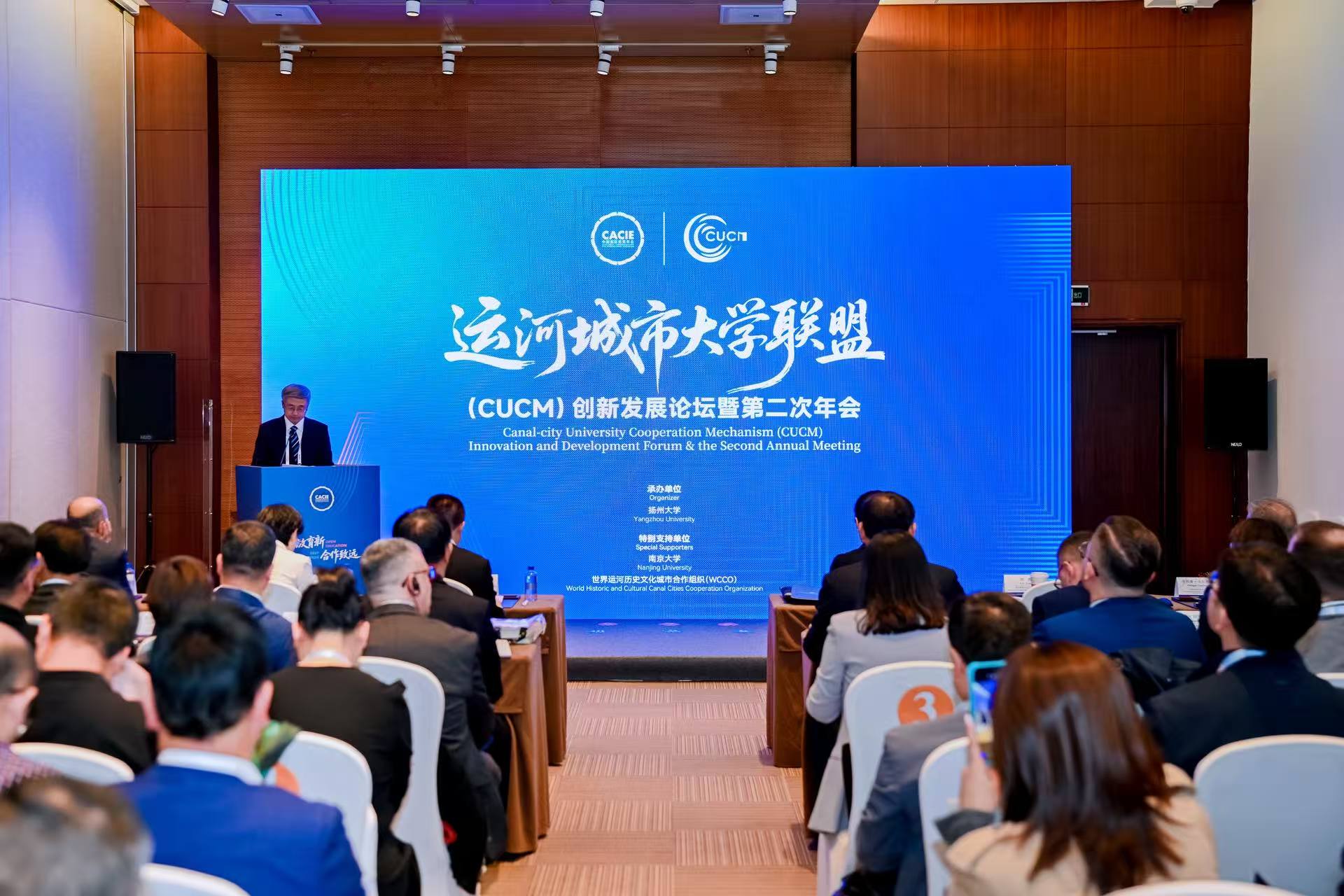
The CUCM Innovation and Development Forum and Second Annual Meeting
During the forum, 10 universities, including GXU, were officially admitted to the mechanism, expanding its membership to 33 institutions across four continents — Asia, Europe, Africa, and South America. The forum also unveiled the "Canal Research Think Tank Consortium" and the "Collaborative Innovation Center for Canal Hydraulic Engineering and Water Environment," released Yangzhou University's series of canal research outcomes, and issued the "Beijing Initiative of the Canal-city University Cooperation Mechanism."
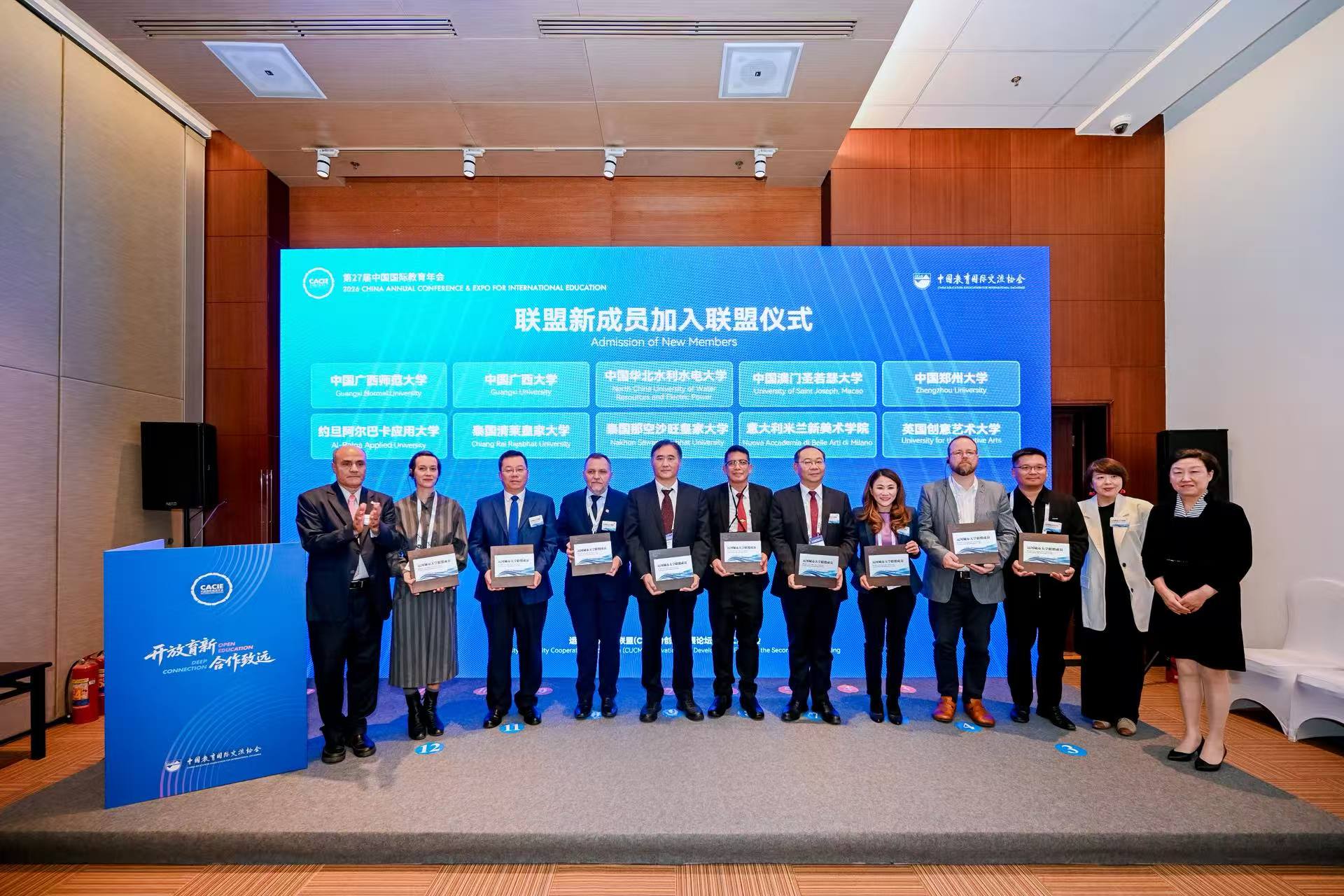
Admission ceremony for new CUCM members
In the thematic discussion session, Yu Wenjin, as a representative of the mechanism's newly admitted universities, chaired the discussion on "Intelligent Empowerment: Jointly Promoting Mutual Learning Between Chinese and Foreign Education." University administrators from China, Thailand, and Brazil exchanged views on empowering higher education through digital intelligence, integrated industry-education talent cultivation in water conservancy and hydropower, international talent development, expanding space for educational cooperation through digital technology, and the role of university alliances in fostering long-term cooperation. In his summary, Yu introduced GXU's opening-up and cooperation toward ASEAN and its distinctive strengths. He noted that using digital intelligence as a bridge while upholding respect for differences, equal mutual learning, and practical cooperation is a shared pursuit of global higher education.
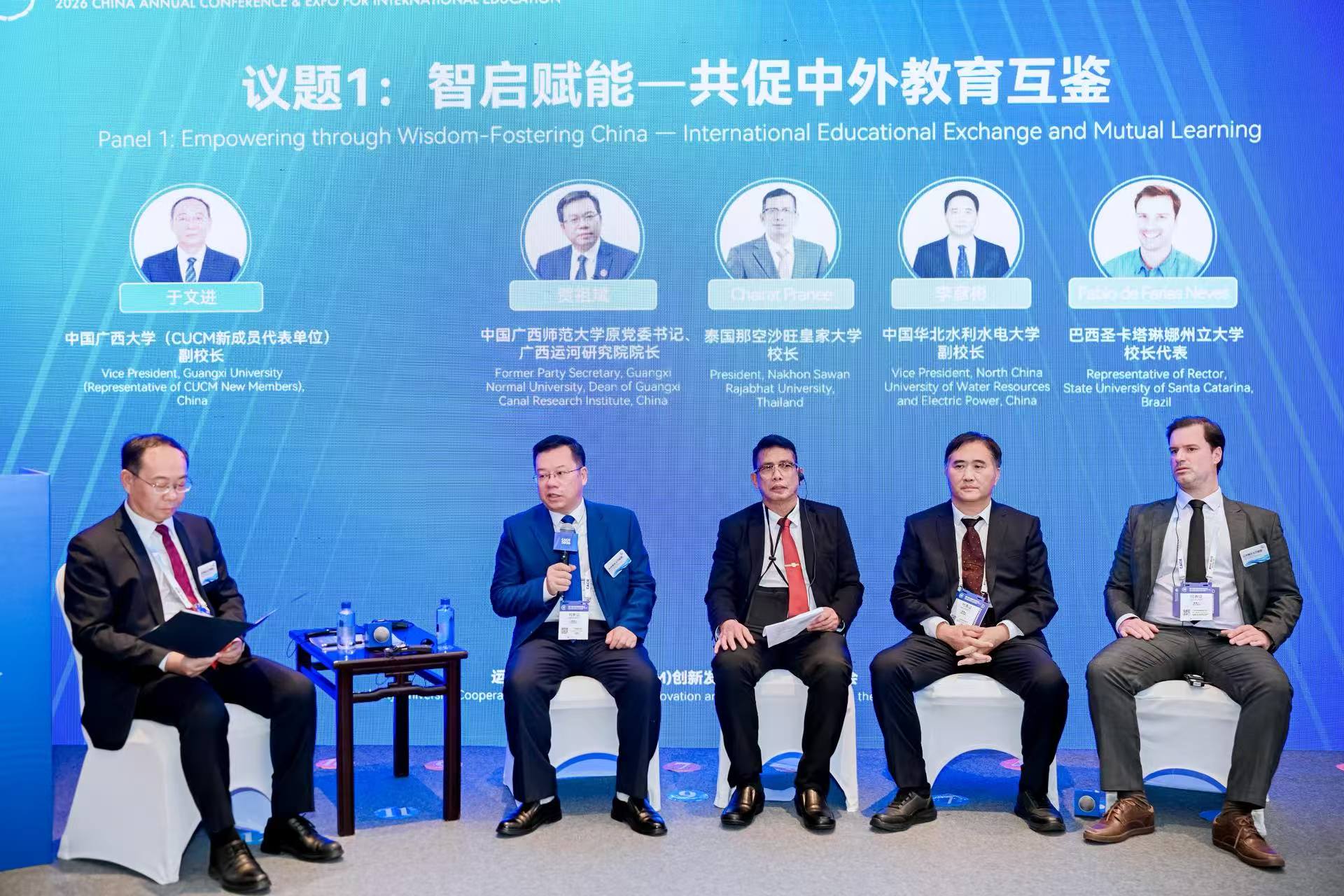
Yu Wenjin chairing the thematic discussion
The launch ceremony and first working meeting of the CUCM Canal Research Think Tank Consortium were held concurrently, and our China-ASEAN Research Institute / Guangxi Research Institute for Innovation and Development became one of the consortium's first member institutions. The consortium was initiated by the Yangtze River Culture Research Institute (China Grand Canal Research Institute) of Yangzhou University. Under the CUCM framework, it is a non-profit academic collaboration and think-tank service platform voluntarily formed by Chinese universities, research institutions, think tanks, and research platforms. Its research covers artificial canals around the world and aims to advance cross-regional, multidisciplinary collaborative research and think-tank cooperation.
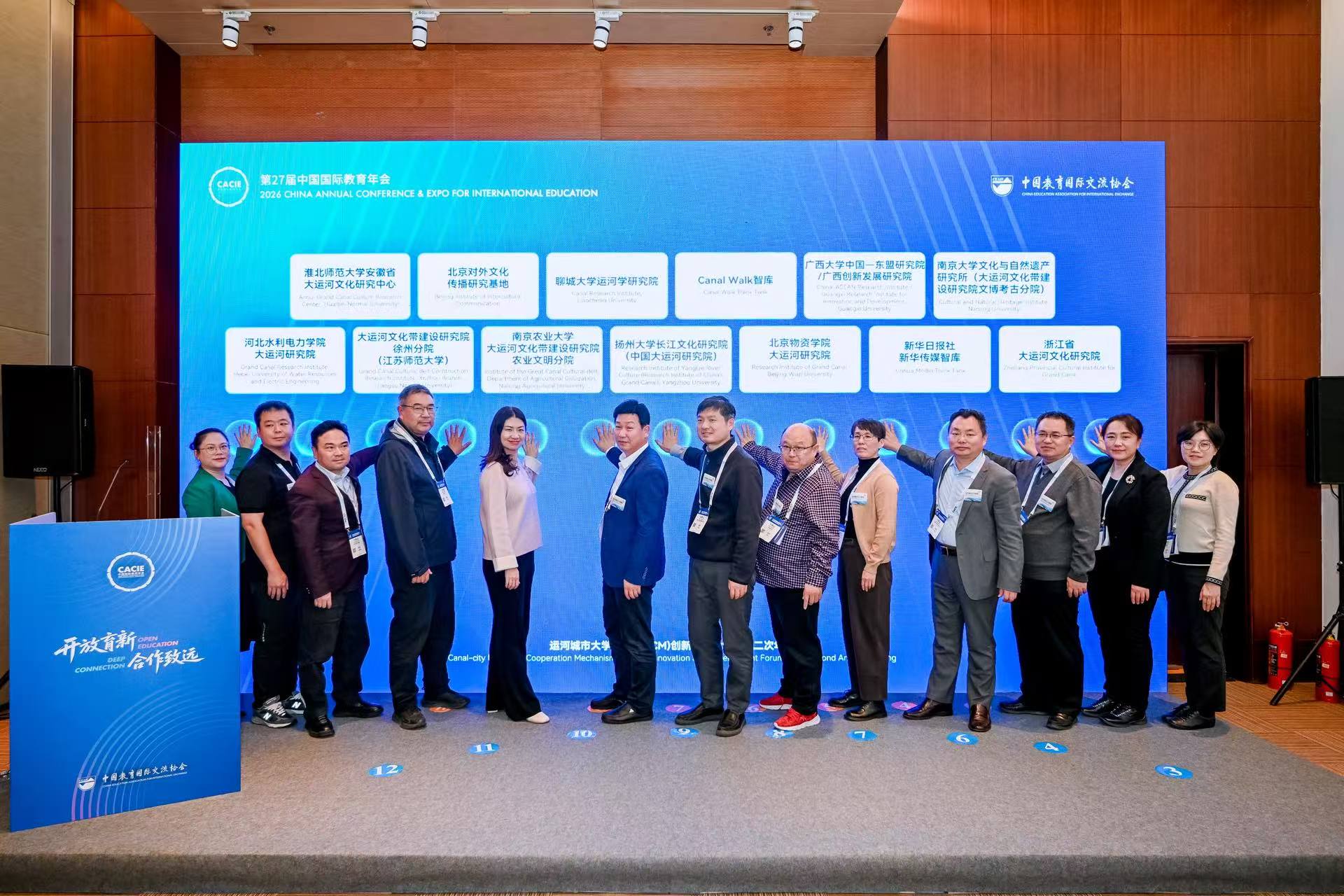
Launch ceremony of the Canal Research Think Tank Consortium
Before the forum opened, Yao Jianlin, President of Yangzhou University, which serves as the mechanism's secretariat, met with the Guangxi university delegation. The two sides held talks on deepening inter-university exchanges and cooperation and jointly cultivating international talent.
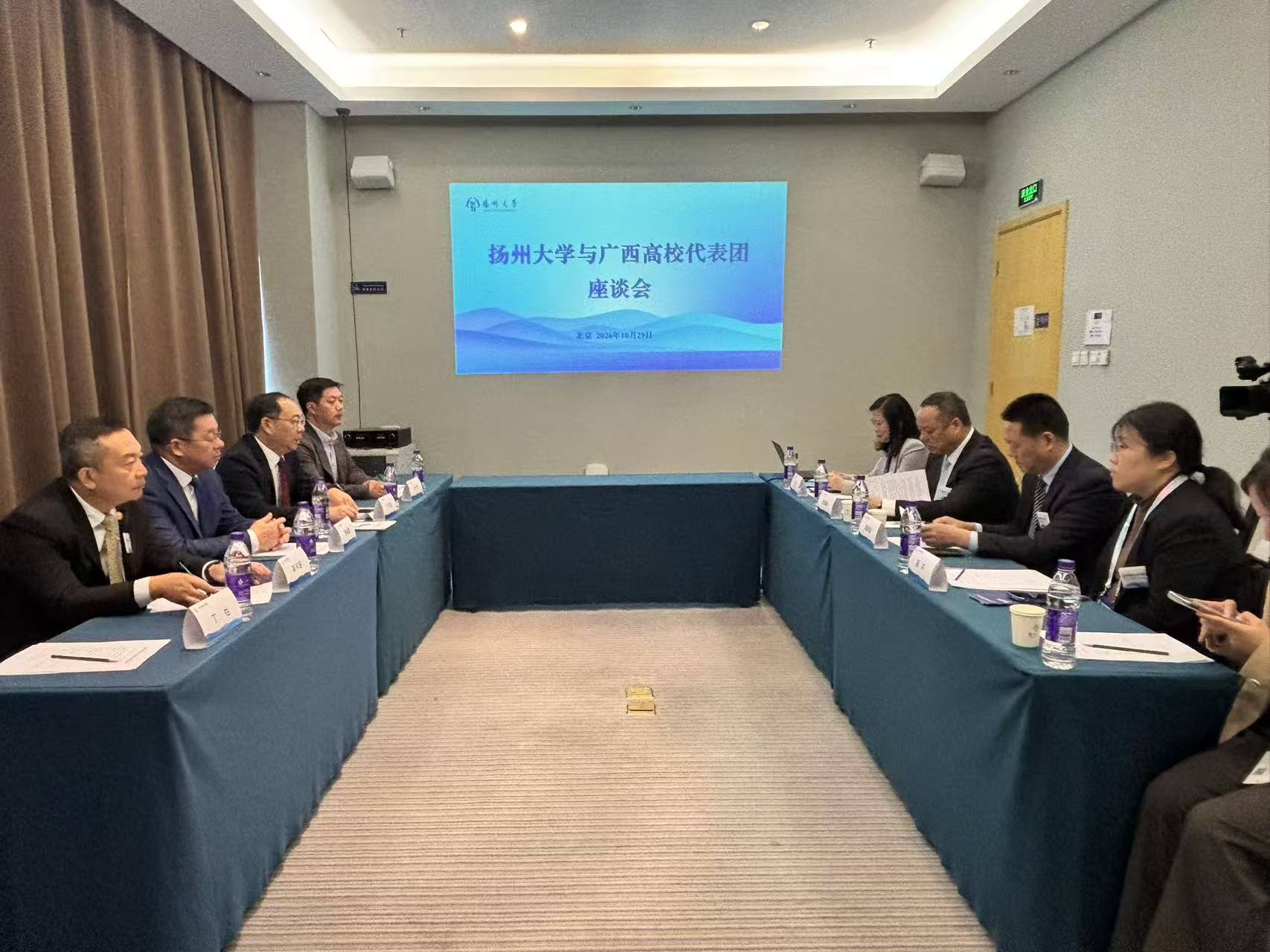
Yangzhou University holds talks with the Guangxi university delegation
Joining CUCM and the Canal Research Think Tank Consortium has created a new platform for GXU to expand international educational cooperation and deepen canal-related research and think-tank exchanges. The university will uphold the philosophy of "extensive consultation, joint contribution and shared benefits," leverage its strengths in opening-up and cooperation toward ASEAN, and use canals as a bond to deepen practical cooperation with CUCM member universities in talent cultivation, scientific research, and people-to-people exchanges — contributing GXU wisdom to the development of canal regions and to mutual learning among Chinese and foreign civilizations.

 Home
>
News & Events
>
Events


